
Compassion toward the poor and vulnerable is often fueled by genuine sympathy. You see the same person on the street corner, looking hungry and upset, and you hand them your lunch before going about the rest of your day. As the giver, this act of charity is noble and meets the immediate physical need of the receiver. But if our response always stops at meeting immediate needs, we can miss an opportunity to help people discover and strengthen the gifts, skills, and abilities they already possess. What if we moved from transactional giving to transformational engagement? What if assistance programs were designed to encourage responsibility and participation?

What if assistance programs were designed to encourage responsibility and participation?
This summer, 40 Catholic Charities staff members and partner organizations participated in Effective Compassion Training, a model developed by Ismael Hernandez. The approach challenges traditional ideas about helping by focusing not only on what a person needs, but also on what they have to offer. Grounded in the principles of Catholic Social Teaching, Effective Compassion seeks to break cycles of dependency and help individuals recognize their inherent dignity and God-given capacities as they work toward stability and independence.
The Catholic View of Compassion
The Catholic understanding of poverty goes beyond a lack of material goods. Every person possesses inherent dignity and a unique set of gifts and capacities. When systems and well-intentioned assistance focus only on what people lack, these can obscure the rich identity and potential of the person in front of us.
As a Catholic organization, we are called to live out charity through Christian love — a love that reaches beyond material assistance.
Catholic compassion is not rooted solely in sympathy. True compassion means viewing every individual as unique, unrepeatable, and irreplaceable, with exceptional value to the world around them. Real charity is relational. It means investing time in listening, accompanying people as they discover (or rediscover) their unique gifts, set their own goals, make healthy decisions, and work toward solutions. Our engagement should help people grow in dignity, responsibility, and independence.
Incorporating Effective Compassion into Programming
Catholic Charities has long prioritized a “hand up” over a “handout.” Instead of focusing solely on what a person lacks, Effective Compassion challenges us to look at the unique talents, skills, and experiences of the individual and invite those who have the capacity to play a greater role in creating solutions to their most significant obstacles. For individuals unable to participate fully—due to severe mental health or addiction issues—we help them overcome their greatest barrier by lovingly connecting them with professional community resources.
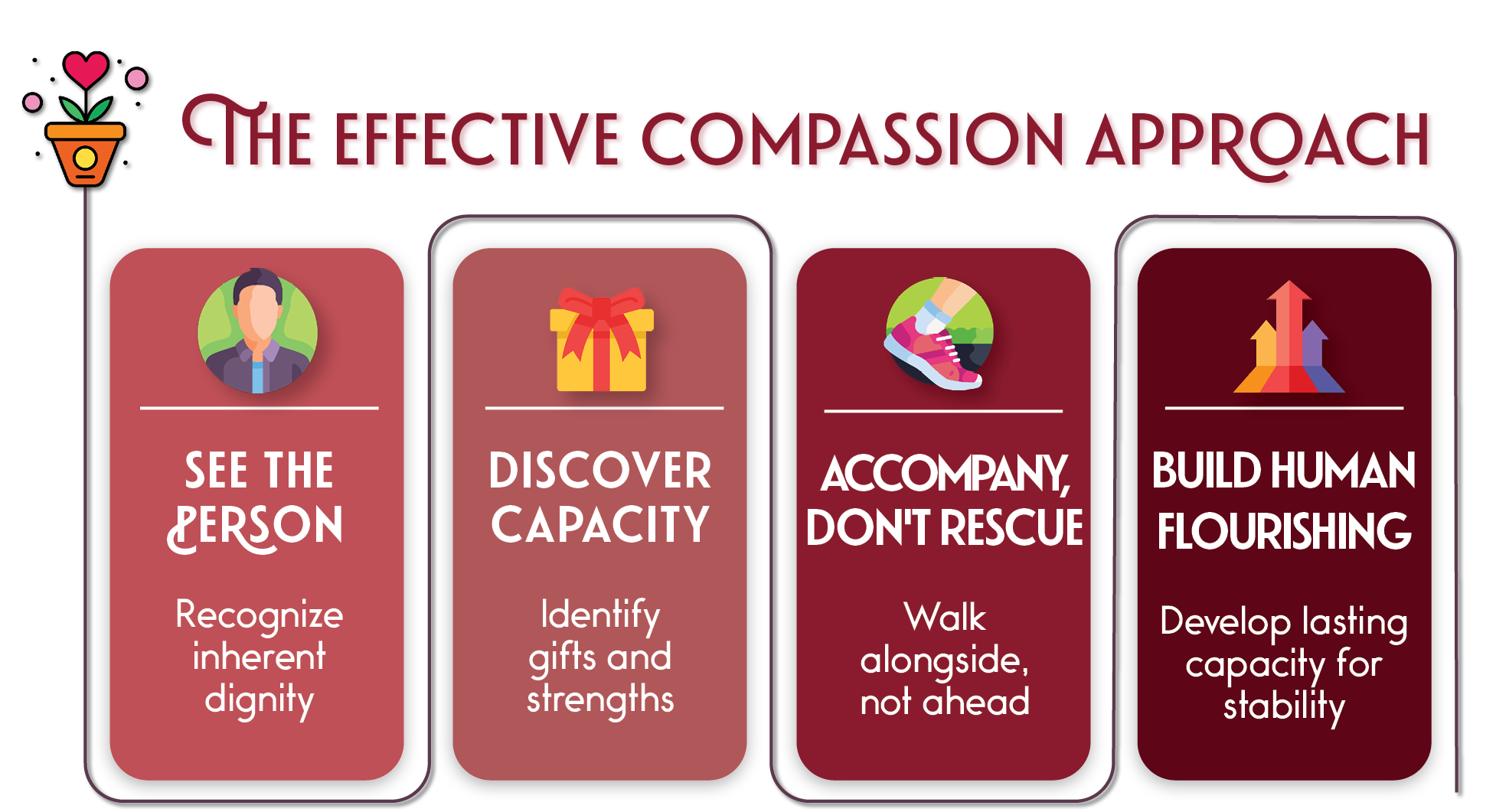
Our staff members have always taken a person-centered approach, seeking to understand each individual and the barriers he or she faces. Effective Compassion builds on this foundation by encouraging us to combine assistance with education, coaching, job development, community connections, and helping people understand the effects of their choices rather than shielding them from every consequence. Accountability, when paired with dignity and support, creates opportunities for growth and transformation.
The model empowers them to use their discovered talents for the benefits of others, allowing them to thrive in community. A person may have time, skills, experience, creativity, or simply the willingness to help. That could mean volunteering an hour at one of our food pantries, mentoring another participant, or sharing a skill they have developed through their own journey.
As part of Catholic Charities' strategic plan, you will continue to see programs evolve, such as the Thrive Life Skills Program, with greater opportunities for client participation and responsibility. Material programs such as our food pantries and Christmas Program will continue to meet real and immediate needs. At the same time, we are working together to incorporate meaningful ways for those we serve to contribute, grow, and recognize their own capacity.
The principles of Effective Compassion compel us to shift from simply giving resources through a transaction to building relationships that affirm dignity, encourage responsibility, support long-term transformation, and help people discover that they have something to give. We do all of this with love, not judgment, as Christ calls us to do.
Learn more about our programming in our 2026 Impact Report.