Compassion With Purpose: Q&A With Bishop Rhoades and Dan Florin
Bishop Kevin C. Rhoades, Chairman of the Board and Dan Florin, CEO of Catholic Charities, discuss the mission of Catholic Charities and its role in serving those most in need throughout our diocese.
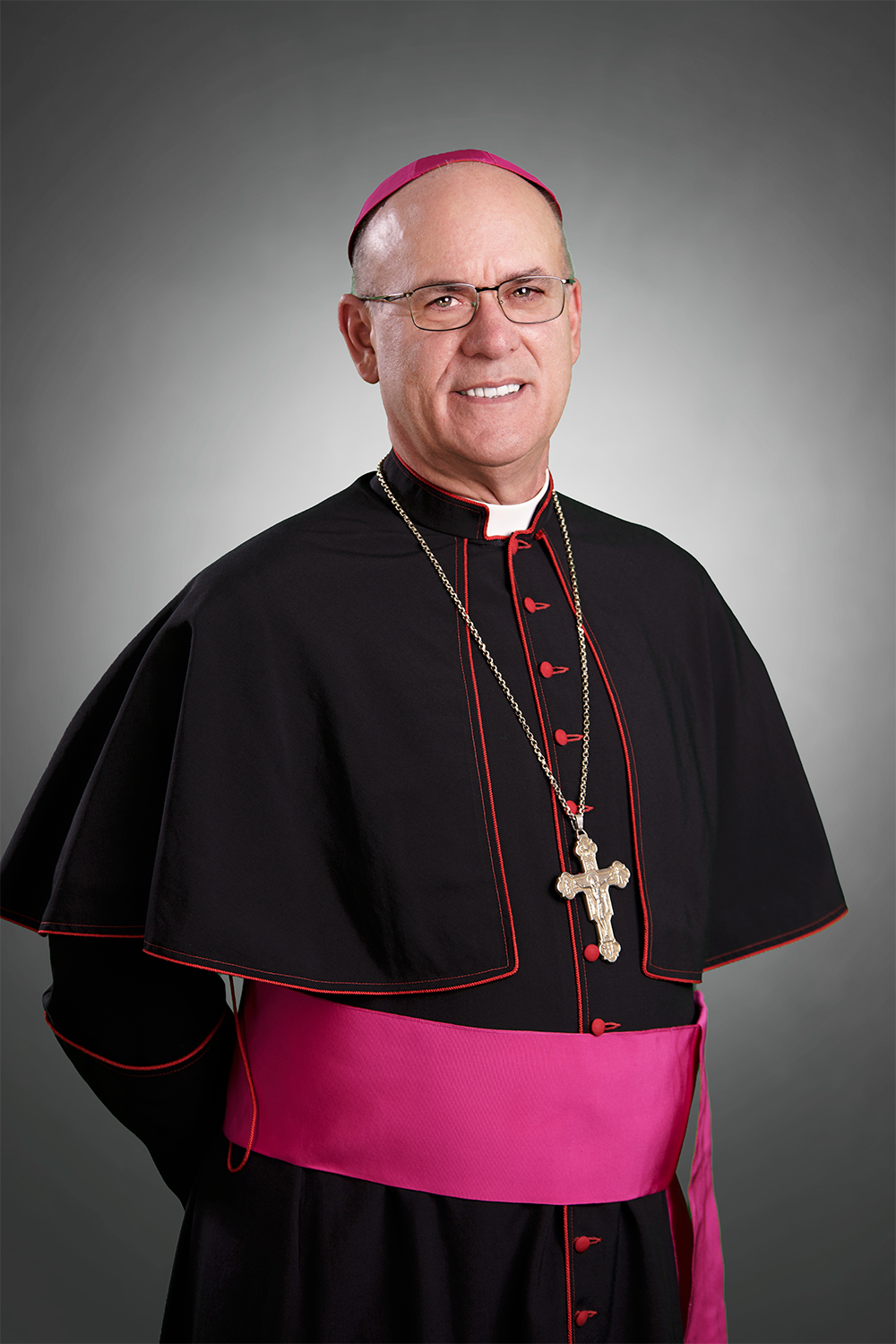
Most Rev. Bishop Kevin C. Rhoades

Dan Florin, CEO of Catholic Charities
BR: What does compassion mean to our Catholic faith?
Throughout the Bible, God's compassion is articulated through His infinite love for the marginalized. The word “compassion” literally means “suffering with.” As Catholics, we strive to do so through active self-sacrificing love, accompanying people in their suffering like the Good Samaritan did. We see examples throughout the Gospel of Jesus seeking out those who are suffering, and are reminded in Matthew 9:12, "Those who are well do not need a physician, but the sick do." Compassion is an action all the faithful are called to, rooted in the self-sacrifice and love modeled by Christ.
DF: What does Compassion With Purpose mean?
What does Compassion With Purpose mean? Our Catholic faith teaches us that compassion is not just a feeling of pity; it is the virtue of charity (love) in action, requiring us to recognize the face of Christ in our neighbors, especially those suffering, and treating everyone with dignity. Many of our neighbors in need who come through our doors are desperate for assistance. Our goal is not to “fix them or save them.” Only God can save souls.
The mosaic design on the cover illustrates that every tile is essential to complete the picture. Our goal is to see each person like a mosaic with unique talents and the capacity to change. Our hope, grounded in faith, inspires us to accompany our brothers and sisters—listening deeply, building trust, and equipping them with the tools and resources needed to unlock their strengths and achieve their God-given potential.
BR: How does Catholic Charities serve our Diocese?
Catholic Charities, rooted in the faith of the Church, recognizes in every needy person their infinite dignity as persons created in the image and likeness of God. The agency treats everyone with profound respect by listening to their stories and helps them to recognize their true worth in the eyes of God. Catholic Charities does not offer a bureaucratic transaction, but a transformative relationship. As the human service arm of the Church in our diocese, Catholic Charities embodies Christ’s love in action by serving the vulnerable through compassionate care, advocacy, and charitable works.
DF: How does Catholic Charities actualize dignity in those they serve?
The Catechism of the Catholic Church teaches, “Man alone is called to share, by knowledge and love, in God’s own life . . . This is the fundamental reason for His dignity. Being in the image of God, the human individual possesses the dignity of a person, who is not just something, but someone” (§356). As the Human Service Arm of the Church, we are directly engaging in the Corporal Works of Mercy and are called to bear witness to human suffering; not looking away from that suffering but bringing our hearts and engaging our reason to the encounter. Treating our vulnerable neighbors as equal partners and authors of their own development, we provide the tools, skills, and opportunities for them to build a better tomorrow, rescuing them from the paralysis of despair.
DF: How is Catholic Charities incorporating Person Centered Care into programming?
Prioritizing program impact over the volume of people served is critical. All programs need clearly defined goals and measurable outcomes, such as the progression of a family’s self-sufficiency, economic independence, and overall well-being. Defining success in this manner will ensure that we are facilitating (not leading) second-order changes that transform the lives of those we encounter. While this may not be possible for some of those we serve due to mental health issues or active substance abuse, we believe that many individuals have the capacity to change, and they just need support and resources from people full of love, hope, and compassion. “To whom much is given, much is expected.” (Luke 12:48)
BR: How does Catholic Charities’ mission fit into the Synod?
The theme of our Synod is “Spreading the Fire of God’s Love,” with an emphasis on outreach to the poor, the suffering, and the vulnerable. In this spirit, we have called every parish, ministry, and community throughout our diocese to embrace this mission with renewed zeal and to reflect on a central question: How is the Church in our diocese called to live the parable of the Good Samaritan? Catholic Charities plays a vital role in answering that call. Through works of mercy and compassionate outreach, Catholic Charities makes visible the love of Christ to those who are struggling, vulnerable, or in need. By serving individuals and families with dignity, hope, and practical assistance, Catholic Charities proclaims the Gospel in action and becomes an important instrument for spreading the fire of God’s love throughout our communities. In this way, its ministry is not separate from the Church’s evangelizing mission, but an essential expression of it, bringing Christ’s healing presence to the world and inviting others to encounter His love through service.