What the New State-Centric Refugee Resettlement Model Could Mean for Local Communities
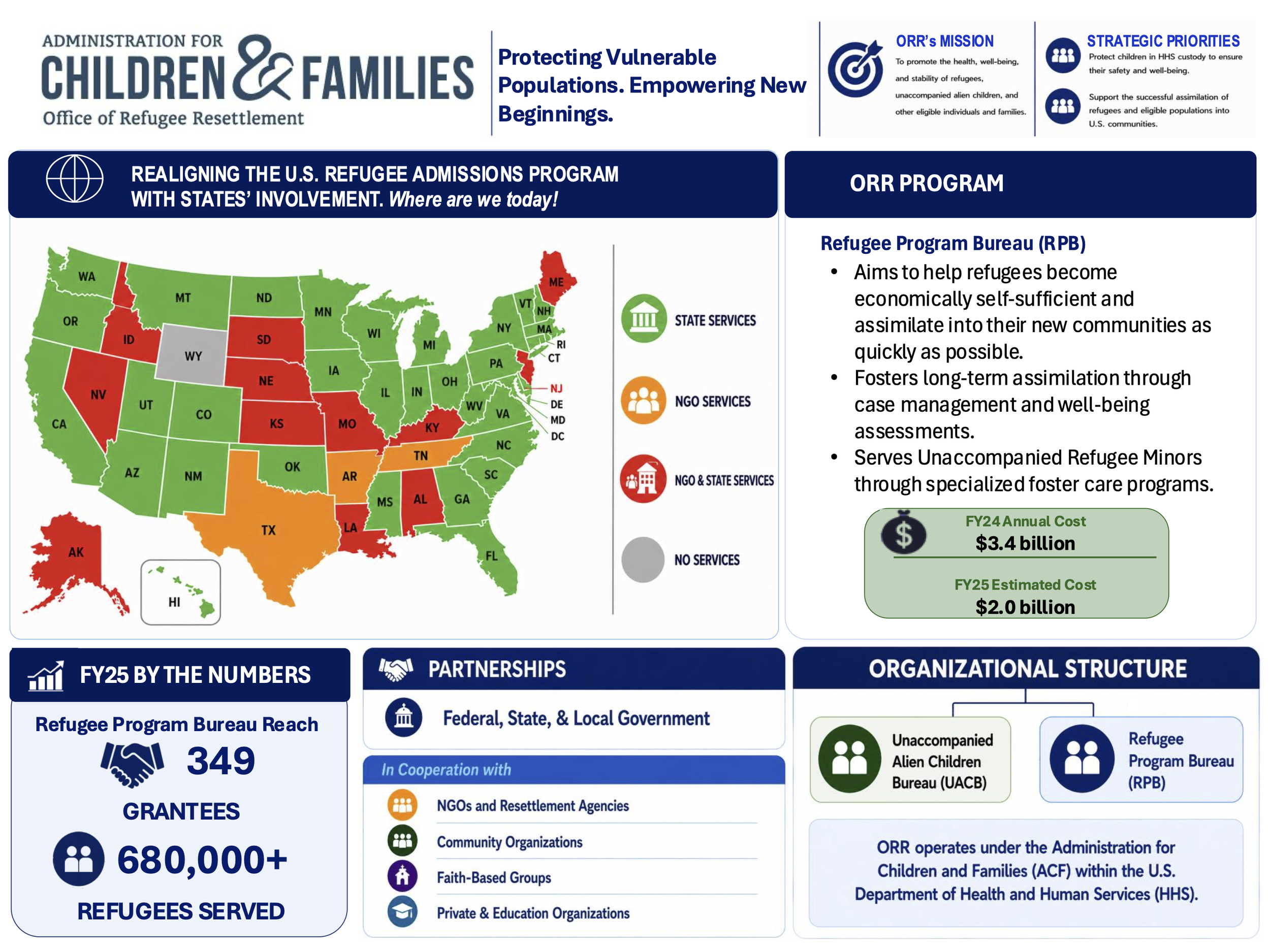
It was announced last week that the federal Office of Refugee Resettlement (ORR) is transitioning to a state-centric refugee resettlement model that could reshape how refugees are placed and supported across the country. Under the new approach, states and local jurisdictions would play a larger role in determining community capacity, coordinating placement, and helping oversee early services for newly arriving refugees.
This shift does not end the federal refugee resettlement program. ORR will still retain legal authority, but it is aiming for stronger coordination with state and local partners, with a national framework expected by FY 2028.
Why the change is happening
ORR says the move is grounded in the Refugee Act’s requirement for consultation with states, as well as Executive Order 14163, which calls for state and local jurisdictions to have a role, where lawful and practicable, in placement decisions. The agency also argues that states are better positioned to understand local service capacity, community needs, and the conditions that affect successful integration.
What changes for local resettlement
For local communities, the biggest change is that placement decisions may become more closely tied to state-led assessments of readiness and capacity. Local governments and community partners may be asked to help identify whether housing, schools, health care, transportation, and social services can support refugee arrivals.
The model also gives states a broader role in services that have traditionally been delivered through a mix of state agencies and nonprofit partners. These services can include initial resettlement support, Refugee Cash Assistance, Refugee Medical Assistance, and Refugee Support Services.
What happens to nonprofits
Nonprofit resettlement agencies may still be central to service delivery, but their role could depend more on state procurement decisions. ORR notes that states can use federal funds to issue grants or contracts to nonprofits, so local agencies may continue providing services even if the administrative structure changes.
That means the shift may not eliminate local providers, but it could change who oversees them and how funding flows. For many communities, the immediate effect may be less about a full reset and more about a new chain of decision-making.
What to watch next
ORR’s transition is unfolding in three phases: ongoing state capacity assessments, a pilot program in FY 2027, and a national framework by FY 2028. States are being encouraged to participate in readiness assessments now, while details about pilot participation are still forthcoming.
For local resettlement agencies, employers, schools, faith communities, and service providers, the key question is how much say the state will have in placement decisions and how quickly new procedures will be implemented. Communities that rely on refugee arrivals should expect more emphasis on state coordination and local capacity planning